


TLDR
- European natural gas prices rose up to 2.4% on Wednesday at the TTF hub
- Trump extended the ceasefire with Iran but kept the naval blockade of the Strait of Hormuz in place
- Iran’s Revolutionary Guards seized two ships near the Strait of Hormuz
- About one-fifth of the world’s LNG passes through Hormuz, which remains effectively blocked
- Europe faces a tough summer refilling gas storage while competing with Asia for alternative supplies
European natural gas prices were volatile on Wednesday, ending the session higher as traders watched developments in the Middle East closely.
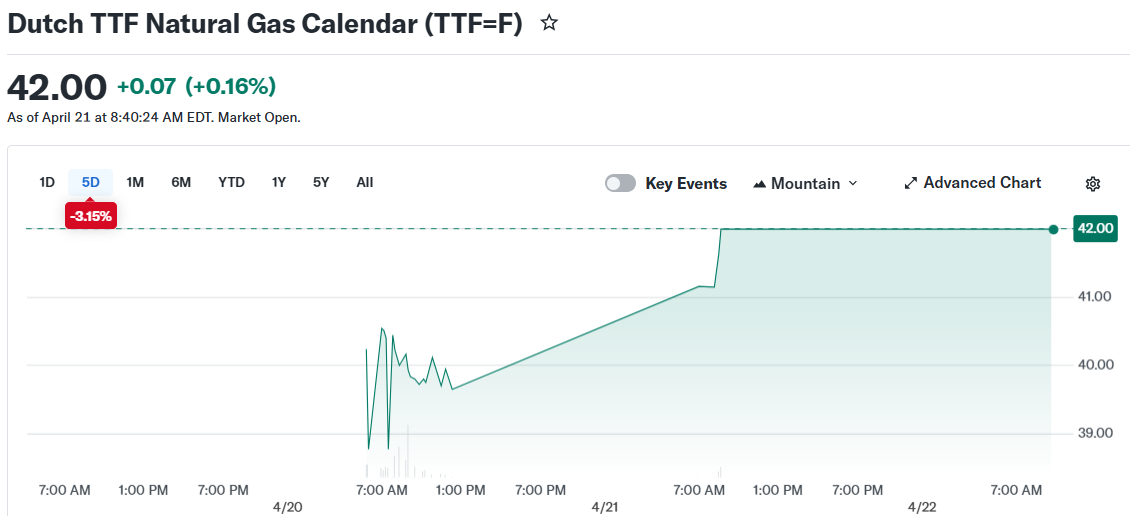
Dutch front-month futures at the TTF hub rose as much as 2.4% to €42.94 per megawatt-hour by mid-morning in Amsterdam. The contracts had already gained more than 8% over the previous two sessions.
The moves came after President Donald Trump confirmed he was extending a ceasefire with Iran, just before it was set to expire. The announcement came after planned peace talks between the two sides did not take place.
Trump said the U.S. would hold off on fresh attacks on Iran. But he confirmed the naval blockade of the Strait of Hormuz would stay in place until talks are “concluded, one way or the other.”
IRAN THREATENS MILITARY RESPONSE TO U.S. BLOCKADE
Iran says the U.S. naval blockade is equivalent to an act of war and must be met with force.
Senior officials dismissed Trump’s ceasefire extension and signaled escalation, warning any action against Iranian vessels would…
— *Walter Bloomberg (@DeItaone) April 22, 2026
Iran’s foreign ministry spokesperson confirmed the ceasefire extension in comments carried by Iranian state television, according to the Associated Press.
Tensions in the strait rose further after Iran’s paramilitary Islamic Revolutionary Guards Corps attacked and seized two vessels near the waterway. A U.K. shipping monitor reported one of the ships was a container vessel.

Trump also said the ongoing U.S. blockade of Iranian ports and coastline would remain. Iran’s foreign minister has called the blockade an “act of war.” Trump argued Iran is “collapsing financially” and wants the strait “opened immediately.”
Why the Strait of Hormuz Matters for Gas Prices
The Strait of Hormuz is a narrow waterway off Iran’s southern coast. Roughly one-fifth of the world’s oil and liquefied natural gas normally passes through it.
Tanker shipping through the strait has been almost entirely shut since the start of the U.S.-Israeli assault on Iran in late February.
“Gas will not flow through the Strait of Hormuz for the foreseeable future,” said Florence Schmit, energy strategist at Rabobank.
Europe’s Storage Problem
Europe is now entering the summer months when it typically rebuilds gas storage ahead of winter. With Hormuz blocked, the region must compete with Asian buyers for supplies from other sources.
Europe has also been dealing with damage to natural gas production facilities in the Middle East, particularly in Qatar.
Current benchmark prices remain above pre-war levels, even after pulling back from peaks hit last month.
Schmit added that “the longer prices stay at the current low levels, the bigger the upside becomes once the physical reality catches up.”
Iran’s Revolutionary Guards seizure of two ships near Hormuz on Wednesday was the latest in a series of attacks on vessels in the area over the weekend, which had already heightened tensions in the waterway.
🚨 Our April Stock Picks Are Live!
A new month means new opportunities. Our analysts have just released their top stock picks for April, highlighting companies with strong momentum that rank highly on our KO Score algorithm. We’re also now sharing trade ideas for both long-term and short-term investors, giving you more ways to spot potential opportunities in the market.
Sign up to Knockout Stocks today and get 50% off to unlock the full list and see which stocks made the cut.
Use coupon code Special50 for your exclusive discount!