



TLDR
- Saudi Arabia is working to restore its damaged East-West pipeline, with half capacity expected within days and full operations in about six weeks
- West Texas Intermediate fell toward $102 a barrel after losing 3.2% on Wednesday; Brent dropped below $106
- The U.S. and Yemen’s Houthis held talks where the Houthis reiterated commitment to a 2025 ceasefire
- The Federal Reserve raised interest rates by 25 basis points to 4.0%, with Chairman Kevin Warsh warning inflation remains too high
- Despite the dip, Brent was still up 1.2% for the week, with losses limited by ongoing U.S.-Iran tensions and U.S. inventory draws
Oil prices fell on Thursday, extending losses from the day before as fears over Middle East supply disruptions began to ease slightly.
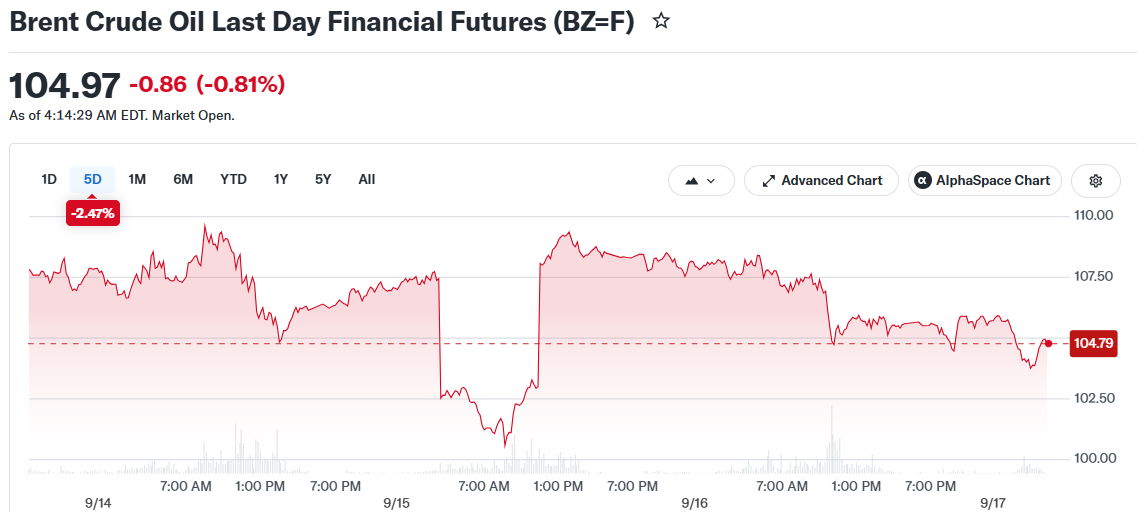
West Texas Intermediate dropped toward $102 a barrel after losing 3.2% on Wednesday, its biggest single-day fall since August 4. Brent crude closed below $106 before falling further to around $105.31.
Saudi Arabia Works to Restore Damaged Pipeline
Saudi Arabia’s East-West pipeline, which carries oil across the country to its Red Sea coast, was damaged last week in Houthi attacks on energy infrastructure.
BREAKING: Saudi Aramco has cancelled all of its September European crude oil allocations and is scrapping every cargo slated for late-September loading onward, with a European lifter saying no Saudi oil cargoes at all until November, per initial reports citing oil trading firm…
— The Hormuz Letter (@HormuzLetter) September 15, 2026
Riyadh is now working to bring back about half the pipeline’s capacity within days, with full operations expected to resume in roughly six weeks, according to a person familiar with the matter.
In the meantime, Saudi Arabia has been rerouting oil through Oman, offering more loadings to Asian refiners via ship-to-ship transfers off Oman’s Sohar port.
This helped keep Middle Eastern supplies flowing despite the military tensions in the region.

U.S.-Houthi Talks Add to Easing Sentiment
The U.S. and Yemen’s Iran-backed Houthis held talks over the weekend. The Houthis said they would not attack U.S. or Israeli ships and reaffirmed their commitment to a 2025 ceasefire.
President Donald Trump said on Wednesday that Iran was seeking a peace deal and that the U.S. was “hopefully toward the end” of the conflict.
However, Washington and Tehran remained at odds over the Strait of Hormuz. Shipping through the waterway, which links the Persian Gulf to global markets, is still running at a fraction of prewar levels.
U.S. Energy Secretary Chris Wright said 18 million barrels of crude and products moved through the Strait of Hormuz earlier in the week. The seven-day average flow was 11 million barrels per day.
Oil’s losses were kept in check by three straight weeks of draws in U.S. crude stockpiles and continued tensions between Washington and Tehran.
A stronger dollar added pressure on crude after the Federal Reserve raised rates by 25 basis points to 4.0%. Chairman Kevin Warsh signaled further hikes could follow, as inflation remains too high.
Crude has still risen about three-quarters in value this year, driven by the U.S.-Iran war and the ongoing Russia-Ukraine conflict.
Brent was still up around 1.2% for the week as of Thursday, showing that despite the daily losses, the broader upward trend has not reversed.
Stop guessing and start investing with confidence. KnockoutStocks gives you the AI insights, market intelligence, and stock research you need to spot opportunities, cut through the noise, and make smarter investment decisions — all in one powerful platform.
Sign up today and get 50% OFF full access to our premium stock picks.
Simply use coupon code SPECIAL50 at checkout to claim your exclusive discount.
