






Key Takeaways
- Heatbit’s $899 Bitwater retrofit converts compatible electric water heaters into bitcoin miners.
- Bitwater uses 20 ASIC chips to deliver up to 34 TH/s while heating household water.
- Heatbit targets Q1 2027 deliveries, with estimated mining revenue reaching $455 annually.
Twenty Mining Chips Inside a Water Heater
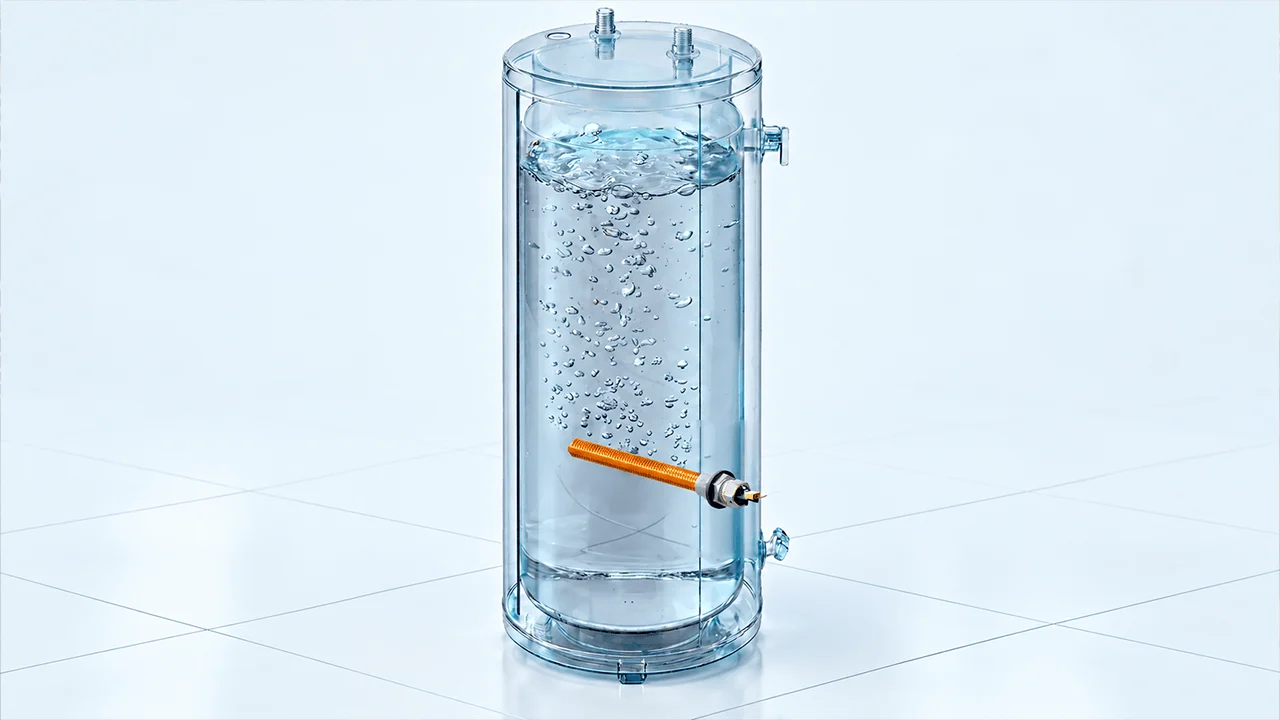
Heatbit is taking bitcoin mining somewhere few homeowners would expect: inside the hot-water tank. Its new Bitwater retrofit replaces the lower heating element in compatible electric water heaters with a device that mines bitcoin while warming the water.
The company opened preorders around Oct. 22, 2026, offering its first Genesis batch for $899. Later batches carry prices reaching $1,299, with initial deliveries scheduled for the first quarter of 2027. It should be noted that Bitwater is a new product with no independently verified customer reviews. Moreover, its projected annual mining earnings can fluctuate considerably because bitcoin prices and mining difficulty change regularly.

The engineering is fairly straightforward, even if the concept sounds peculiar. Twenty Bitmain BM1370 application-specific integrated circuit (ASIC) chips perform Bitcoin’s SHA-256 calculations, producing heat that transfers directly into the surrounding water.
Heatbit advertises mining capacity of up to 34 terahash per second (TH/s), with electricity consumption reaching 600 watts. Unlike conventional mining equipment, the water-cooled system requires no fans, allowing the company to market it as silent.
Mining Revenue Meets the Monthly Utility Bill
Here’s the financial twist. Conventional electric water heaters already convert electricity into heat, while Bitwater attempts to extract mining revenue from that same energy expenditure. Heatbit’s pitch is essentially that homeowners can earn bitcoin (BTC) while performing a chore they’re already paying for.
Estimated mining revenue ranges from approximately $1 to $1.25 daily under favorable conditions, potentially generating $365 to $455 annually. As mentioned above, those figures depend on bitcoin’s price range, network difficulty, operating hours, and household water consumption.
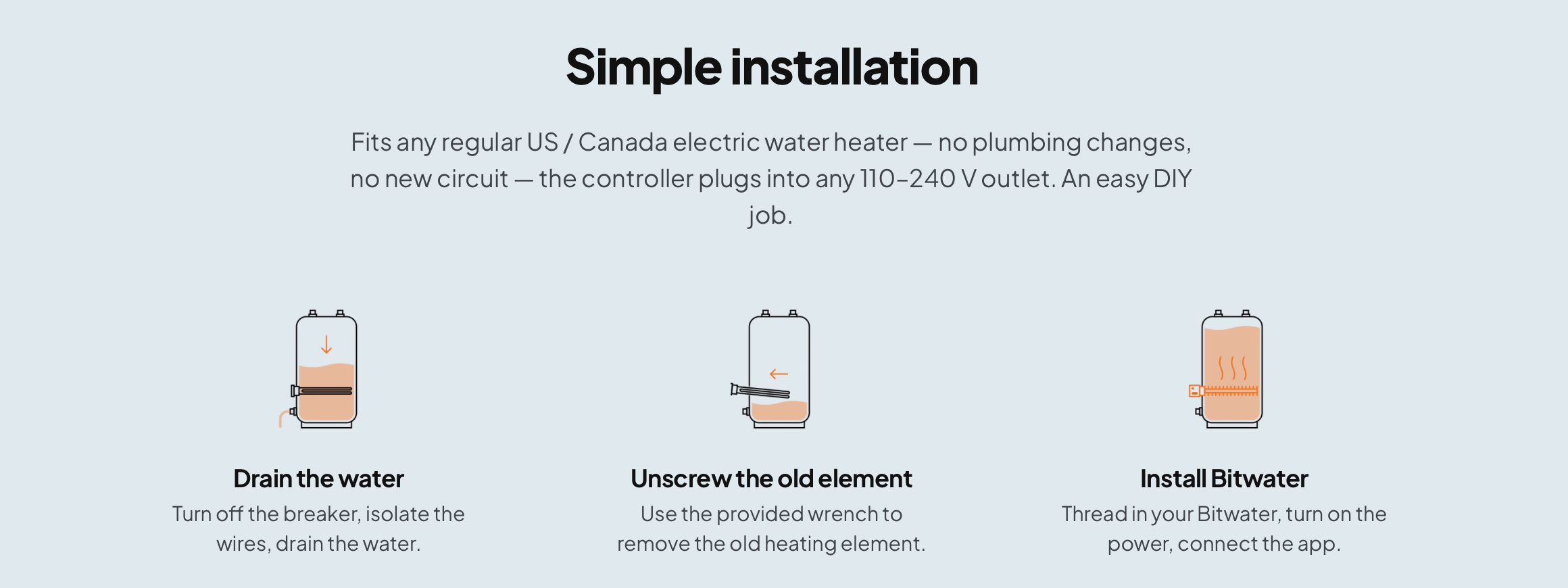
At $899, the advertised economics suggest a theoretical payback period of roughly two to 2.5 years. That calculation assumes relatively steady mining conditions and excludes installation expenses. “Is it difficult to install?” Heatbit’s X account asked on social media, while also sharing a video of the company’s founder showing how the device is installed. The X account added:
“We designed Bitwater to work with your existing water heater. No need to replace the tank.”
There’s another catch. Bitwater’s 600-watt output falls well below the 4,500-watt heating elements commonly found in residential tanks, meaning slower recovery when hot-water demand climbs. The existing upper element remains operational to handle heavier usage.
A $899 Bet on Bitcoin and Hot Showers
Bitwater fits compatible 30- to 80-gallon electric storage tanks with standard screw-in ports. Gas, tankless, and heat-pump systems aren’t supported. The package includes a controller, leak sensor, and installation hardware. Heatbit also incorporates a powered titanium anode intended to reduce corrosion.
Users can monitor temperatures, mining performance and earnings through the company’s application. Solo mining is the default, although alternative mining pools are supported. Founded in 2020 by Alex Busarov, Heatbit previously developed mining-powered space heaters and air purifiers. Bitwater extends that idea into another household appliance.
Yet the product remains in preorder, without independent long-term performance data and customer reviews. And while the water will get hot regardless of whether mining proves profitable, the $899 investment depends on something considerably less predictable than tomorrow’s shower: Bitcoin’s mining economics.