• Latest
  • Trending
Bitcoin’s Final 929,465 BTC Will Take More Than a Century to Mine

Bitcoin’s Final 929,465 BTC Will Take More Than a Century to Mine

August 16, 2026
EU Crypto Migration Opens Door to MiCA Scammers

EU Crypto Migration Opens Door to MiCA Scammers

August 17, 2026
CZ Announces Privacy Measures Update for Trust Wallet: ‘It’s Impossible to Clean Out’

CZ Announces Privacy Measures Update for Trust Wallet: ‘It’s Impossible to Clean Out’

August 17, 2026
Why bitcoin’s $48 billion in futures open interest looks like a powder keg?

Why bitcoin’s $48 billion in futures open interest looks like a powder keg?

August 17, 2026
Apple Patches macOS Flaw Used to Mine Monero on Hijacked Macs

Apple Patches macOS Flaw Used to Mine Monero on Hijacked Macs

August 17, 2026
Trader Bags $282K by Copying Binance Founder CZ’s Wallet Activity

Trader Bags $282K by Copying Binance Founder CZ’s Wallet Activity

August 17, 2026
Bits of Gold Breach May Expose 200,000 Crypto Users, But Funds Remain Safe Online

Bits of Gold Breach May Expose 200,000 Crypto Users, But Funds Remain Safe Online

August 17, 2026
Gen Z Is Buying ETFs and Holding Tight While Other Generations Trade More Actively, Binance Says

Gen Z Is Buying ETFs and Holding Tight While Other Generations Trade More Actively, Binance Says

August 17, 2026
Chainalysis Challenges $95M ICE Contract With TRM Labs

Chainalysis Challenges $95M ICE Contract With TRM Labs

August 17, 2026
Bitcoin to $10,000 a ‘Faustian Bargain’: Bloomberg’s Top Strategist Updates BTC Price Outlook

Bitcoin to $10,000 a ‘Faustian Bargain’: Bloomberg’s Top Strategist Updates BTC Price Outlook

August 16, 2026
  • Privacy Policy
Monday, August 17, 2026
MtRushmoreCrypto - Where Crypto Rocks
  • Home
  • Top News
  • Crypto
  • Crypto Technical Analysis
  • About Us
No Result
View All Result
  • Home
  • Top News
  • Crypto
  • Crypto Technical Analysis
  • About Us
No Result
View All Result
Logo
No Result
View All Result
Home Crypto

Bitcoin’s Final 929,465 BTC Will Take More Than a Century to Mine

J_News by J_News
August 16, 2026
in Crypto, Top News
0
Bitcoin’s Final 929,465 BTC Will Take More Than a Century to Mine
0
SHARES
0
VIEWS
Share on FacebookShare on Twitter


Key Takeaways

  • Bitcoin had issued 20.07 million BTC, or 95.57% of nominal supply.
  • Bitcoin’s 2028 halving could cut new issuance from about 450 BTC daily to 225 BTC.
  • Bitcoin miners may rely entirely on fees around 2140, after block subsidies reach zero.

That is the part often lost in the “BTC is almost fully mined” headline. Yes, 95.57% of the nominal supply is already out there circulating. But the Bitcoin network was built to push most of its issuance into its early years, then make the remaining coins harder and slower to earn. The last few percentage points are not a short countdown. They are most definitely a generational process.

At the time of writing, at 8 a.m. EDT on Aug. 15, 2026, bitcoin miners currently receive 3.125 BTC for each block added to the blockchain. A block is simply a batch of transactions that has been verified and permanently recorded. Bitcoin targets one block about every ten minutes, putting current issuance near 450 BTC a day, or about 164,250 BTC a year if the network stays close to schedule.

Related articles

EU Crypto Migration Opens Door to MiCA Scammers

EU Crypto Migration Opens Door to MiCA Scammers

August 17, 2026
CZ Announces Privacy Measures Update for Trust Wallet: ‘It’s Impossible to Clean Out’

CZ Announces Privacy Measures Update for Trust Wallet: ‘It’s Impossible to Clean Out’

August 17, 2026

Bitcoin’s Supply Faucet Keeps Tightening

The issuance schedule is hard-coded. No central bank can vote to change it, and no government can print more bitcoin in a crisis. Every 210,000 blocks, or roughly every four years, the reward paid to miners is cut in half. Bitcoiners call that event a halving.

When Satoshi first launched Bitcoin, the reward initially began at 50 BTC per block, then dropped to 25, 12.5, 6.25, and today’s 3.125 BTC. The next halving is expected around 2028. At that point, the reward falls to 1.5625 BTC per block, cutting expected daily issuance from about 450 BTC to around 225 BTC. The 2028 halving will be the last time miners get a full coin in the subsidy, as it will shrink to 0.78125 BTC by 2032.

A perspective of the estimated BTC subsidy up until 2060. Source data recorded by timechainstats.com.

That is why the remaining 4.43% matters more than it first appears. Bitcoin moved from 25% issued to 50% issued in less than two years. Reaching 75% took less than four more. The pace then slowed sharply. Bitcoin passed the 95% threshold around Dec. 3, 2025, and is projected to reach 99% around February 2035. What’s amazing is the fact that the final 1% would then take roughly another century.

The ‘Last Bitcoin’ Is a Misleading Phrase

There will not be a dramatic final block in 2140 that spits out one last whole BTC. By then, mining rewards will be super tiny. One bitcoin (BTC) is divisible into 100 million satoshis, and the block subsidy gets smaller until miners are paid in a handful of satoshis instead of whole coins.

The projected schedule makes the decline plain. According to halving statistics published by timechainstats.com, the reward is expected to be 74 satoshis in 2112, 37 in 2116, 18 in 2120, nine in 2124, four in 2128, and a mere two satoshis in 2132. After a final period that pays one satoshi per block, the subsidy reaches zero around 2140. So far, everything has gone according to plan.

But even that date is an estimate. The halving is triggered by the number of blocks mined, not by a date on a calendar. Bitcoin aims for a ten-minute average, but blocks can arrive faster or slower before the network adjusts the mining difficulty. The broad timeline is clear, though: the supply does not stop suddenly. It fades away, one tiny reward at a time.

There is also a small catch behind the 21 million figure. Bitcoin cannot create fractions of a satoshi. Eventually, halvings produce rewards too small to pay, leaving the theoretical maximum at about 20,999,999.9769 BTC. The gap is minuscule, but it is a useful reminder that the famous 21 million cap is a clean shorthand, not the exact mathematical and final payout.

Miners Are About to Feel It Again

The network halving matters because miners are paid to keep Bitcoin running. They operate specialized computers that validate transactions and secure the network. Their revenue comes from two places: newly created BTC and transaction fees paid by users.

Right now, the newly created coins still do most of the work. During the 24-hour period reflected in the network figures, mining revenue totaled about $28.7 million. Transaction fees made up a mere 0.69% of that amount. Fees can spike during periods of heavy activity, but low fees have been the norm lately, and it shows how heavily miners still depend on the subsidy.
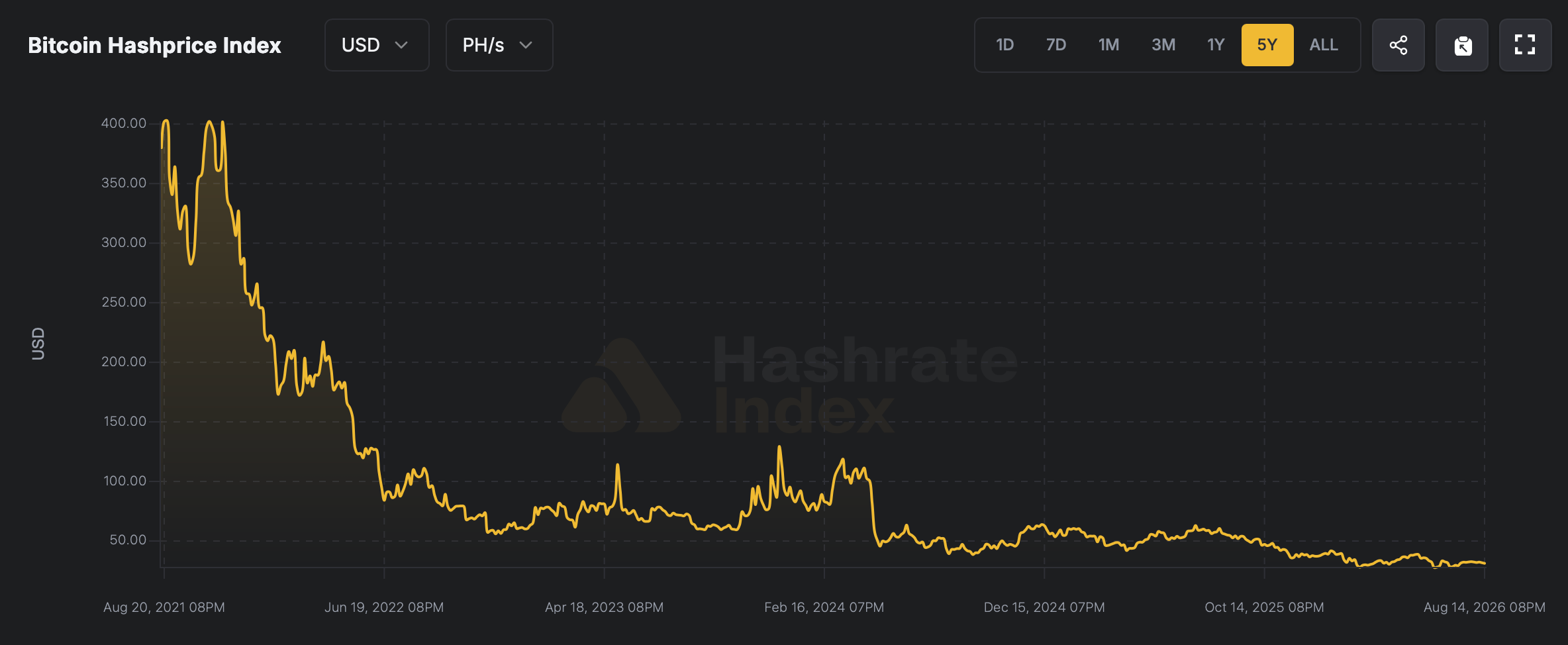
Hashprice chart
Bitcoin’s hashprice, or the estimated value of a specific amount of hashpower produced per day (in this chart’s case petahash per second – PH/s), has dropped considerably since 2021. Hashprice chart screenshot taken on Aug. 15, 2026, via hashrateindex.com.

That dependency gets more uncomfortable after every halving. In 2028, miners will receive half as much new bitcoin for doing the same basic job. If the BTC price rises, fees increase, machines become more efficient, or energy gets cheaper, the industry can absorb the hit. If those offsets fail, weaker operators shut down first.

In 2026, two years after the 2024 halving, miners are grinding through a hashprice bear market. The mass retreat of publicly traded miners chasing artificial intelligence (AI) infrastructure has only tightened the screws.

Bitcoin’s Security Budget Is Being Rewritten

Hashrate, the total computing power devoted to mining, is Bitcoin’s first line of defense. Higher hashrate makes it more expensive to attack the network. This weekend’s figure of about 900 exahashes per second (EH/s) shows how large the mining industry has become, but it does not guarantee that power stays online forever.

Mining is a business with thin margins and brutal swings. When revenue drops, less efficient machines go dark. Bitcoin’s difficulty adjustment then reduces the amount of work needed to mine blocks, helping block production return toward its target pace. The system keeps moving, but the economics behind it constantly change.

That is why the real question is not whether Bitcoin can survive until 2140. It is whether transaction fees will become a durable source of miner income as the subsidy shrinks. The network does not need to wait for the last satoshi to confront that problem. It is already working through it every four years.

Scarcity Is Powerful, Not Magical

For investors, the supply schedule remains one of Bitcoin’s strongest selling points. At the current rate, roughly 164,250 BTC are issued each year. After the next halving, that annual flow falls to about 82,125 BTC. Four years later, it drops again. New supply becomes increasingly difficult to ignore when demand rises.

But scarcity does not set a price by itself. At just under $63,000 per coin at 8 a.m. EDT on Saturday, bitcoin still trades on adoption, regulation, investor appetite, liquidity, and basically the wider economy as a whole. A predictable supply schedule can make Bitcoin different from government-issued currencies, but it cannot force buyers into the market.

The current 929,465 BTC left to mine are not the same as the coins available to buy. Some already mined Bitcoin is likely gone forever because private keys were lost, devices failed or owners made irreversible mistakes. Nobody knows how much. A wallet that has not moved in years could be lost, or it could belong to someone waiting.

The next real test comes in 2028, when the subsidy is expected to fall again. Bitcoin’s price will grab the headlines, but miner revenue, fees, and hashrate will tell the deeper story. Those numbers will show whether the network can keep paying for security as the new supply dries up.
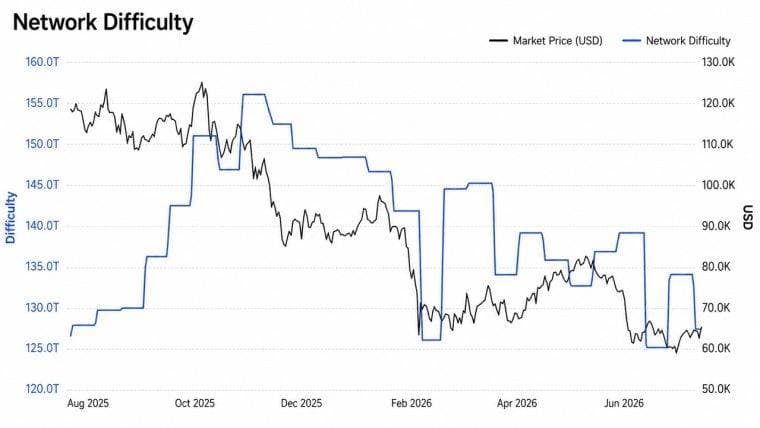

Bitcoin’s Difficulty Adjustment Explained: How the Network Punishes Itself Every Two Weeks

Bitcoin’s Difficulty Adjustment Explained: How the Network Punishes Itself Every Two Weeks

Every 2,016 blocks, i.e. roughly every two weeks, Bitcoin automatically resets how hard it is to mine a block, a…

Read Now

Bitcoin’s Difficulty Adjustment Explained: How the Network Punishes Itself Every Two Weeks

Bitcoin.com News

Bitcoin’s Difficulty Adjustment Explained: How the Network Punishes Itself Every Two Weeks

Every 2,016 blocks, i.e. roughly every two weeks, Bitcoin automatically resets how hard it is to mine a block, a…

Read Now

Bitcoin’s Difficulty Adjustment Explained: How the Network Punishes Itself Every Two Weeks

Bitcoin.com News

Bitcoin’s Difficulty Adjustment Explained: How the Network Punishes Itself Every Two Weeks

Read Now

Every 2,016 blocks, i.e. roughly every two weeks, Bitcoin automatically resets how hard it is to mine a block, a…


Source link

ShareTweetShareShare

Related Posts

EU Crypto Migration Opens Door to MiCA Scammers

EU Crypto Migration Opens Door to MiCA Scammers

by J_News
August 17, 2026
0

TLDR MiCA’s July 1 enforcement forced more than 1,700 unlicensed crypto platforms to stop serving EU customers. Fraudsters are copying...

CZ Announces Privacy Measures Update for Trust Wallet: ‘It’s Impossible to Clean Out’

CZ Announces Privacy Measures Update for Trust Wallet: ‘It’s Impossible to Clean Out’

by J_News
August 17, 2026
0

Inherent flawsIgnoring coins is importantBinance co-founder Changpeng Zhao has retired the public wallet he had been using after token transfers...

Why bitcoin’s $48 billion in futures open interest looks like a powder keg?

Why bitcoin’s $48 billion in futures open interest looks like a powder keg?

by J_News
August 17, 2026
0

Volume, meanwhile, is dead simple as it measures the number of contracts that changed hands during a given period. Think...

Apple Patches macOS Flaw Used to Mine Monero on Hijacked Macs

Apple Patches macOS Flaw Used to Mine Monero on Hijacked Macs

by J_News
August 17, 2026
0

TLDR Attackers exploited a macOS Screen Sharing flaw to gain root access and install Monero mining software on internet-facing Macs...

Trader Bags $282K by Copying Binance Founder CZ’s Wallet Activity

Trader Bags $282K by Copying Binance Founder CZ’s Wallet Activity

by J_News
August 17, 2026
0

Key TakeawaysA trader turned $9,700 into $282,000, a 29x return, by tracking CZ’s public wallet.CZ’s token burn sent Marscoin surging...

Load More

Enter your email address:

Delivered by FeedBurner

Quick Navigate

  • Home
  • Crypto
  • Crypto Technical Analysis
  • Top News
  • Thank You
  • Store
  • About Us

Top News

DOGE slides below $0.070 as market sentiment weakens

8,000 Devices Infected, 80 Crypto Wallets Accessed by Video Game Malware

Crypto Advocacy Groups Support CLARITY Passage as Ethics Rules Face Pushback

© 2021 mtrushmorecrypto - Crypto Related News Blog

We use cookies on our website to give you the most relevant experience by remembering your preferences and repeat visits. By clicking “Accept”, you consent to the use of ALL the cookies.
Do not sell my personal information.
Cookie SettingsAccept
Manage consent

Privacy Overview

This website uses cookies to improve your experience while you navigate through the website. Out of these, the cookies that are categorized as necessary are stored on your browser as they are essential for the working of basic functionalities of the website. We also use third-party cookies that help us analyze and understand how you use this website. These cookies will be stored in your browser only with your consent. You also have the option to opt-out of these cookies. But opting out of some of these cookies may affect your browsing experience.
Necessary
Always Enabled
Necessary cookies are absolutely essential for the website to function properly. These cookies ensure basic functionalities and security features of the website, anonymously.
CookieDurationDescription
cookielawinfo-checkbox-analytics11 monthsThis cookie is set by GDPR Cookie Consent plugin. The cookie is used to store the user consent for the cookies in the category "Analytics".
cookielawinfo-checkbox-functional11 monthsThe cookie is set by GDPR cookie consent to record the user consent for the cookies in the category "Functional".
cookielawinfo-checkbox-necessary11 monthsThis cookie is set by GDPR Cookie Consent plugin. The cookies is used to store the user consent for the cookies in the category "Necessary".
cookielawinfo-checkbox-others11 monthsThis cookie is set by GDPR Cookie Consent plugin. The cookie is used to store the user consent for the cookies in the category "Other.
cookielawinfo-checkbox-performance11 monthsThis cookie is set by GDPR Cookie Consent plugin. The cookie is used to store the user consent for the cookies in the category "Performance".
viewed_cookie_policy11 monthsThe cookie is set by the GDPR Cookie Consent plugin and is used to store whether or not user has consented to the use of cookies. It does not store any personal data.
Functional
Functional cookies help to perform certain functionalities like sharing the content of the website on social media platforms, collect feedbacks, and other third-party features.
Performance
Performance cookies are used to understand and analyze the key performance indexes of the website which helps in delivering a better user experience for the visitors.
Analytics
Analytical cookies are used to understand how visitors interact with the website. These cookies help provide information on metrics the number of visitors, bounce rate, traffic source, etc.
Advertisement
Advertisement cookies are used to provide visitors with relevant ads and marketing campaigns. These cookies track visitors across websites and collect information to provide customized ads.
Others
Other uncategorized cookies are those that are being analyzed and have not been classified into a category as yet.
SAVE & ACCEPT
No Result
View All Result
  • Home
  • Top News
  • Crypto
  • Crypto Technical Analysis
  • About Us

© 2021 mtrushmorecrypto - Crypto Related News Blog