


On-chain data is not just about traders and exchanges.
Bitcoin miners are one of the most important groups to watch when trying to understand where the market may be heading next.
Miners are unique because they are the first receivers of newly created Bitcoin. Their behaviour often reveals whether the market is under pressure or quietly preparing for the next move.
One key metric that helps track this is Miner Reserve.
What Is Miner Reserve?
Miner Reserve shows the total amount of Bitcoin held by miner wallets.
In simple terms, it tells us whether miners are holding onto their Bitcoin or selling it.
When miner reserves go up, it means miners are holding more BTC instead of selling.
When miner reserves go down, it usually means miners are selling their BTC into the market.
Since miners are a constant source of supply, their decisions directly impact price behaviour.
Why Miner Behaviour Matters
Miners usually sell Bitcoin to cover electricity costs, infrastructure expenses, and operations.
Because of this, they tend to sell more when prices are high and profitability is strong.
On the other hand, when prices are low and profit margins shrink, miners often reduce selling and start holding. This behaviour shows confidence that prices may be higher in the future.
That’s why miner behaviour is considered a leading indicator, not something that reacts after the move has already happened.
Miner Accumulation vs Miner Distribution
When miners start accumulating Bitcoin, it usually means that selling pressure is reducing. Fewer coins enter the market, which often happens near market bottoms or during accumulation phases.
When miners begin distributing heavily, more Bitcoin flows into the market. This can increase selling pressure, especially during rallies.
Both phases give important clues about market sentiment.
How Miner Reserves Affect Price
Rising miner reserves reduce circulating supply, which can support price stability or future upside.
Falling miner reserves increase available supply, which can slow down rallies or add downside pressure.
Sudden and large changes in miner reserves often appear around periods of high volatility or trend reversals.
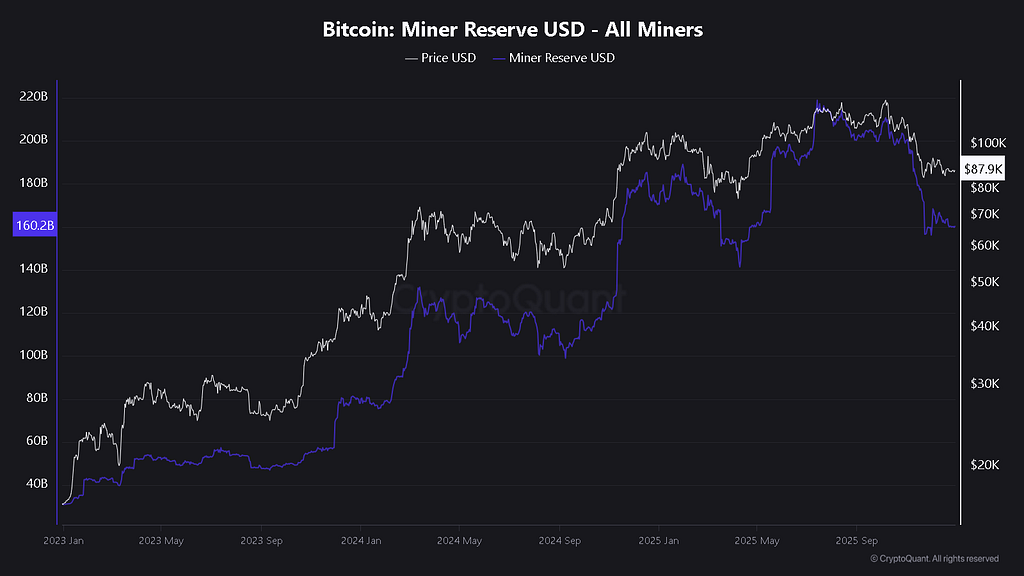
Chart Explanation (Quick Insight)
In the chart shown, before Bitcoin bottomed around $16,000, miner reserves were clearly increasing.
This indicates that miners were accumulating Bitcoin near the bottom rather than selling.
At the same time, market sentiment was extremely bearish. Historically, this combination has often marked accumulation zones before major trend reversals.
Miners were confident when the market was fearful.
Understanding Crypto On-Chain Metrics|| Part 7: Miner Reserve was originally published in The Capital on Medium, where people are continuing the conversation by highlighting and responding to this story.
