



TLDR
- The US Dollar Index edged lower Friday but is on track for a weekly gain
- US producer prices came in flat for July, cutting Fed rate hike expectations
- Markets now price only a 35% chance of a September Fed rate hike, down from 55%
- The Japanese yen is headed for a 1% weekly loss despite intervention support
- Oil prices are set for a 4% weekly jump after the US threatened an indefinite Iran naval blockade
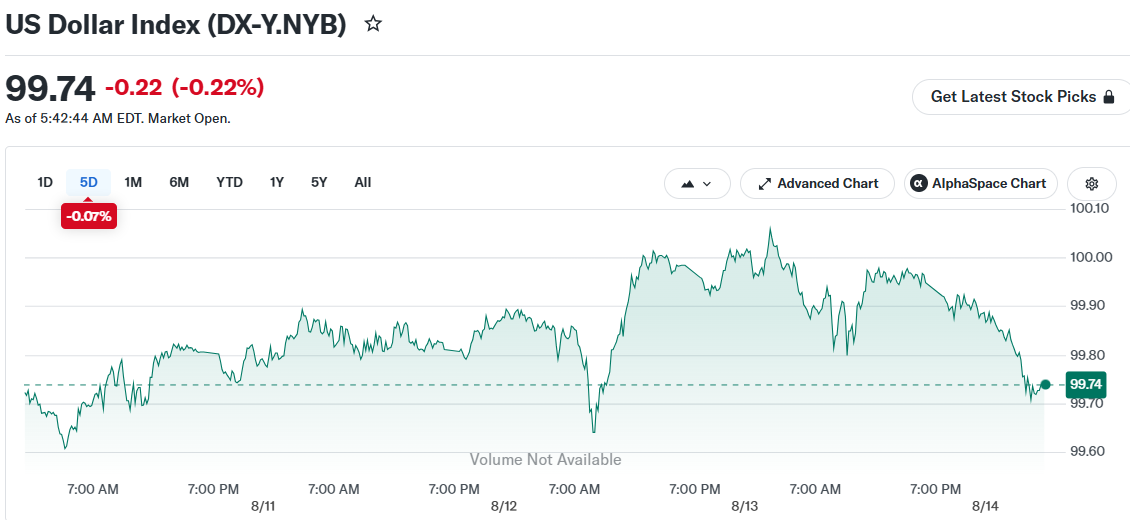
The US dollar dipped slightly on Friday but remained on course for a weekly gain after a run of soft inflation data reduced the chances of a Federal Reserve rate hike in the near term.
The US Dollar Index fell 0.1% to around 99.82 on Friday morning. Despite the small daily drop, the index has held up well over the week.
Thursday’s producer price index report showed US wholesale prices were flat in July. That came after consumer prices rose 3.4% year-on-year, with core inflation easing to 2.5%.
Together, the data have pushed rate hike expectations lower. Markets now see just a 35% chance of a Fed rate hike at the September meeting, down from 55% a week ago, according to CME FedWatch.
Weak labor market data from the previous week added to the picture. The combined data have led traders to scale back bets on further Fed tightening.
Oil Prices Limit Dollar Losses
Oil prices rose sharply this week, up around 4%, after the US Defense Secretary Pete Hegseth said the US military could sustain a naval blockade of Iranian ports indefinitely.
The move is part of President Donald Trump’s strategy to keep economic pressure on Iran while peace negotiations remain stalled.

Shipping through the Strait of Hormuz, a key route for global oil and gas, remains severely disrupted. Higher oil prices are keeping inflation concerns alive despite the soft US data.


🇺🇸🇮🇷 Oil is climbing again after the U.S. threatened an indefinite naval blockade of Iran.
The threat put supply fears back in play.
Brent pushed up to around $88 a barrel and WTI to roughly $84, both on track for weekly gains of about 4% after sliding more than 2% the session… pic.twitter.com/wvYZtMGq0m
— Mario Nawfal (@MarioNawfal) August 14, 2026
The rise in oil also pushed up Treasury yields. An auction of 30-year Treasuries on Thursday produced the highest yield since 2001. The 30-year yield rose to 5.228%, while the 10-year yield climbed to 4.659%.
Higher yields reflect growing concern about US fiscal health, which is adding a layer of complexity to the currency market.
Yen Under Pressure Despite Intervention
The Japanese yen edged lower Friday, with the dollar buying around 159.20 yen. The yen is headed for a 1% weekly loss.
The yen had strengthened after joint US-Japan currency intervention in late July and early August, but those gains have since faded.
Traders are watching the 160 yen level closely. A break above that level could trigger fresh intervention from Japanese authorities.
Expectations for a Bank of Japan rate hike in September have risen, but analysts say the central bank would need to signal a clearly hawkish stance to give the yen lasting support.
Elsewhere, the Chinese yuan traded flat, while the Australian dollar edged 0.2% higher.
The dollar’s weekly gain reflects the balance between easing Fed rate bets pulling it lower, and rising oil prices and fiscal worries offering support.
Stop guessing and start investing with confidence. KnockoutStocks gives you the AI insights, market intelligence, and stock research you need to spot opportunities, cut through the noise, and make smarter investment decisions — all in one powerful platform.
Sign up today and get 50% OFF full access to our premium stock picks.
Simply use coupon code SPECIAL50 at checkout to claim your exclusive discount.