Key Takeaways:
- Ripple diversified Ripple Payments to an end-to-end licensed, stablecoin platform in over 60 markets.
- The network has already managed over $100 billion payments and has a stablecoin market with an annual capacity of $33 trillion.
- Custody, collections and liquidity are new tools targeted specifically at regulated fintech companies and on-chain moving banks.
Ripple is fast diversifying on its stablecoin policy. On March 3, 2026, it announced a significant upgrade at Ripple Payments to become a full-stack platform, capable of moving both fiat and digital assets using a single system.
The point is definite: Ripple is eager to become the engineering infrastructure of a regulated world in terms of stablecoin payments.
Read More: Ripple-Linked Hidden Road Hits NSCC Directory, $3T Flow Eyes XRPL Shift
Ripple Payments Becomes End-to-End Platform
Ripple Payments has become the end-to-end payment service both on legacy banks and blockchain networks.
The upgrade follows Ripple’s acquisitions of Palisade and Rail. These additions power managed custody, treasury automation, and named virtual accounts. Businesses can now collect funds, hold assets, convert between fiat and stablecoins, and settle into operational accounts without stitching together multiple vendors.
Read More: Ripple Deploys $550M as XRP Ledger Expands to Community Funding in 2026
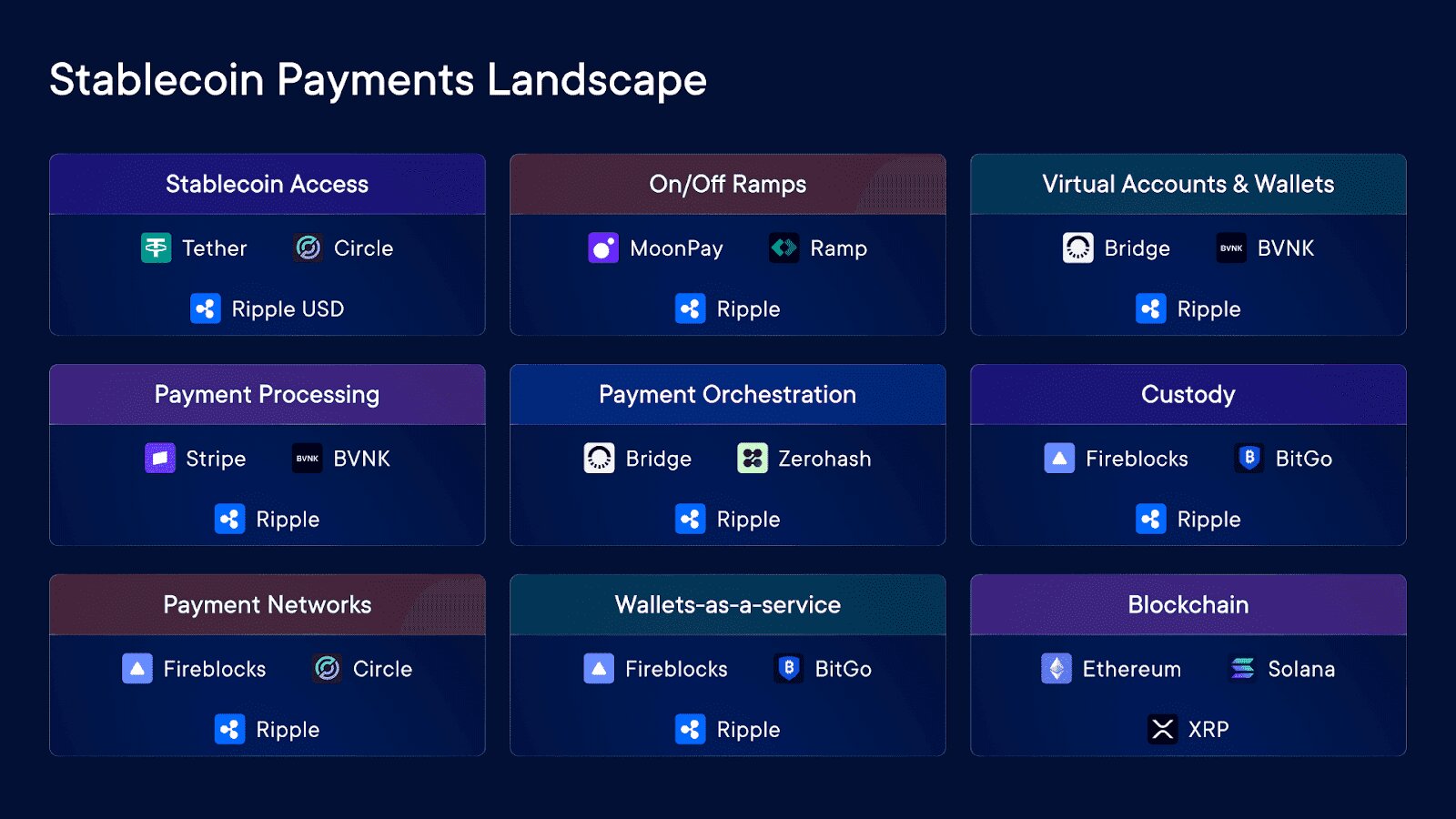
From Collection to Payout in One System
The platform enables:
- Named virtual accounts and wallets
- Automated conversion between fiat and stablecoins
- Consolidated settlement into a single account
- Scalable wallet provisioning and secure transaction signing
Ripple says this removes operational friction for fintechs handling cross-border liquidity. According to the company, the network already lives in more than 60 major markets. It has made over $100 billion in aggregate payments..

Stablecoin Market Hits $33 Trillion
Ripple is developing at the same pace as the use of stablecoins. Transactions in global stablecoins last year totaled to $33 trillion, and approximately 30% of the on-chain transactions consisted of stablecoins.
That scale explains the race among financial institutions to integrate blockchain settlement. Ripple is positioning its platform as enterprise-grade infrastructure rather than a pilot experiment.
Monica Long, Ripple President, said that financial institutions need a fully managed and licensed infrastructure, processing digital assets with the strict level equivalent to traditional finance standards. Currently, Ripple is holding over 75 licenses in the globe including Trust Charter from the New York Department of Financial Services (NYDFS).
Fintech and Bank Adoption Accelerates
Ripple indicates that various financial institutions have been using this upgraded platform. Among them:
- AMINA Bank, crypto bank in Switzerland managed by FINMA, uses Ripple to process cross-border transactions and payment cash flows nearly realtime.
- Banco Genial makes use of the Ripple network to execute outbound payments from Brazil.
- In the case of managed custody and liquidity, Corpay uses both to finance and pay off positions in the Asia-Pacific region with RLUSD.
- MassPay supports payouts across more than 100 countries, including currencies such as EUR, VND, THB, and TRY.
These integrations focus on practical use cases: cross-border B2B transfers, treasury settlement, and stablecoin-to-fiat conversions. Ripple is not pitching theory. It is pitching an operational scale combining custody, liquidity routing, and compliance under one regulated platform.
With stablecoin adoption accelerating and institutions seeking licensed providers, Ripple is tightening its grip on the enterprise crypto payments sector.