Imagine this: you wake up and see a zero balance when you log into your wallet. You check the transactions — a withdrawal at 4:21 a.m. to an unknown address…
Then your eyes catch a headline in the news: “Quantum hacking has left thousands of wallets empty.” Creepy, right?
In October 2024, Cointelegraph reported a possible hack of one of the core encryption algorithms (RSA), which caused a serious stir in the crypto community.

Later, it turned out to be fake news, but the questions didn’t go away: Is a quantum hack actually possible? What happens in the worst-case scenario?
Let’s break it all down. No unnecessary panic !
What is a quantum computer?
Today’s computers work with bits — units of information that can be 0 or 1, like a switch: either on or off.
A quantum computer uses a different unit of information — a qubit. It can be 0, 1, or both at the same time (this is called superposition).

As long as a qubit isn’t touched, it’s like a magician: balancing between 0 and 1.
But the moment you measure it, the trick ends — the wave function collapses, and the qubit becomes either 0 or 1.
If you’re new to crypto, before you go any further, I recommend checking out a video that explains what blockchain and crypto are, and how it all works.
https://medium.com/media/3c469f10b6a30adb42187c707fcc2d85/href
What does this mean for the crypto world?
A qubit, with its superposition, is like a universal lockpick, able to probe all possible combinations at once.
But it only works in the hands of the right algorithm — like Shor’s algorithm, designed for factoring large numbers.
Or Grover’s algorithm, aimed at searching unstructured data, which allows for super-fast password and hash cracking.
Cryptography vulnerable to Shor’s algorithm:
- RSA — based on factoring large numbers, used for things like HTTPS key exchange.
- ECDSA — used in Bitcoin and most crypto wallets.
- EdDSA — an elliptic-curve-based digital signature algorithm.
Symmetric cryptography (where the same key is used for encryption and decryption) is considered more resistant to quantum attacks, but even it can be weakened by Grover’s algorithm — roughly by a factor of 2.
How soon could a real break actually happen?
Algorithms on their own are useless without a real quantum computer.
If you tried to run them on regular processors, cracking modern cryptography wouldn’t take millions — it would take tens of millions of years.
For a quantum break to become realistic, you’d need stable, synchronized operation of at least 10 million qubits. As of today, we’re barely past a few thousand.
You can judge the progress of the last five years for yourself:
- 2020: 50–100 qubits (first wave of NISQ systems)
- 2021: 127 qubits (IBM “Eagle”, IonQ)
- 2022: 433 qubits (many startups emerge in neutral atoms and ion traps)
- 2023: 1000+ qubits (surpassed 1000 qubits for the first time)
- 2024: 1500+ qubits (focus shifts to error correction and stable logical qubits)
- 2025: 4000+ qubits (but only 10–50 stable logical qubits)
Progress is happening, but it’s not moving at rocket speed. Unlike the semiconductor industry, you can’t release a new iPhone every year.
It’s more like building a pyramid out of extremely fragile and unstable materials, which is essentially what physical qubits are.
Current estimates suggest the 10 million qubit threshold won’t be reached before 2035, even with the most optimistic projections. So crypto enthusiasts still have plenty of time to prepare for the new era.
How does a quantum hack actually work?
At the core of the attack is the ability to derive a private key from a public key by solving the discrete logarithm problem.
A classical computer would need millions of years to do this, but a quantum one, thanks to superposition, can handle such problems far more efficiently.
The key thing to understand is this: a quantum computer does not “guess” a seed phrase and does not crack hashes. The potential vulnerability lies in the signature math itself. From there, the private key can be reconstructed from the public key.
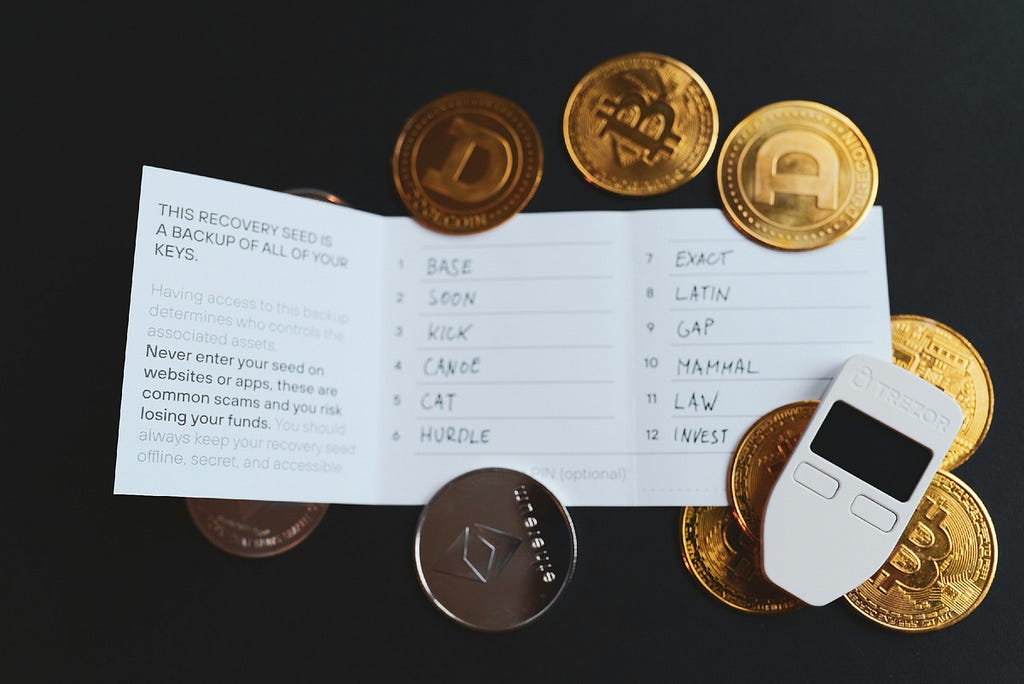
But for now, all of this is still theoretical. To break Bitcoin with a 256-bit private key, you’d need at least 10,000 logical qubits.
And to support those, you’d need 10 to 100 million physical qubits, due to noise, instability, and the need for error correction.
Quantum decoherence is the main technical barrier scientists still can’t overcome. Solving it could take 10 years — or all 30.
By then, your tokens will most likely already be sitting in a post-quantum bunker. The crypto community isn’t standing still either.
Join my Telegram — I’ll keep you updated on all the quantum madness and show you how to make money with crypto while spending just a couple of minutes a day.
What measures are already being taken?
Right now, post-quantum cryptographic algorithms are being developed to withstand attacks using quantum computers.
In 2022, the U.S. National Institute of Standards and Technology (NIST) selected the first standards for post-quantum cryptography — including Kyber (for encryption) and Dilithium (for digital signatures).
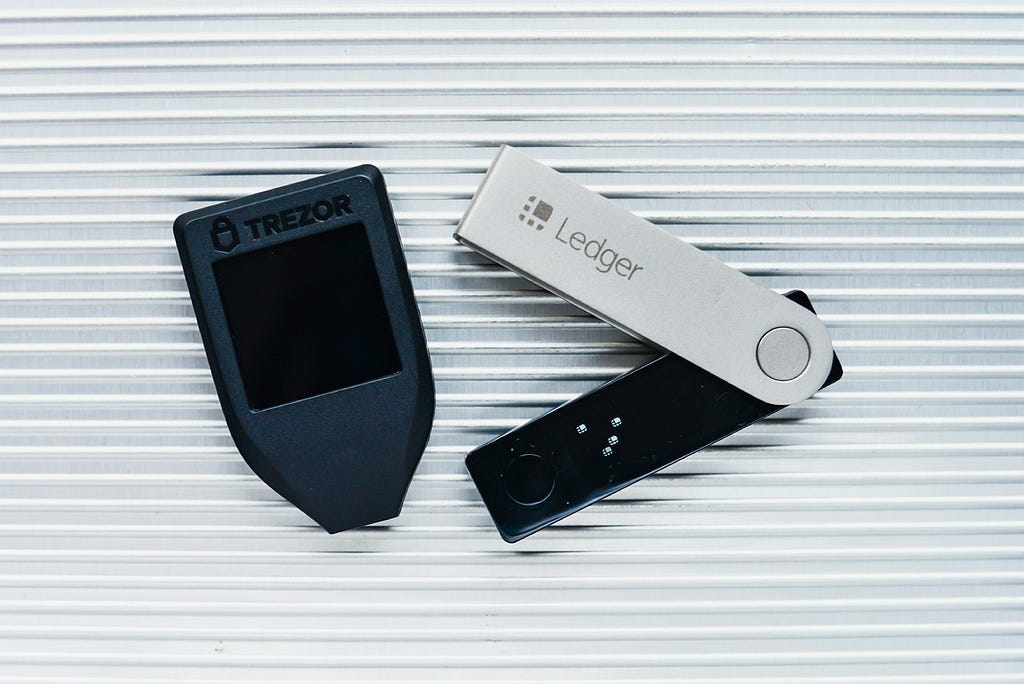
Major players like Trezor and Ledger are closely following research into post-quantum (PQ) cryptography, while some lesser-known companies have already rolled out advanced solutions.
For example, the Swiss company SEALSQ has released the QS7001 chip, which combines both of the above encryption algorithms and reduces the risk of message interception by narrowing the attack window.
By the way, in the YouTube video I explain how and where to safely store crypto today!
https://medium.com/media/530147c940dd1cf969e6ab6a2c667a25/href
What is a post-quantum wallet?
A post-quantum wallet is a specialized digital wallet that uses cryptographic algorithms designed to resist quantum attacks.
Unlike traditional wallets that rely on classical cryptography, post-quantum wallets allow you to:
- easily switch signature and encryption algorithms, closing discovered vulnerabilities and raising the security level;
- work with larger keys and more complex cryptographic schemes, since they aren’t limited by memory;
- use hybrid schemes that support both classical and post-quantum signatures at the same time, ensuring compatibility.
And here’s the thing: all of this is already implemented in QRL Wallet, which has been NIST-approved since 2018. As of today, it’s the most mature example of a post-quantum wallet with a real network, a live blockchain, and a mobile app.
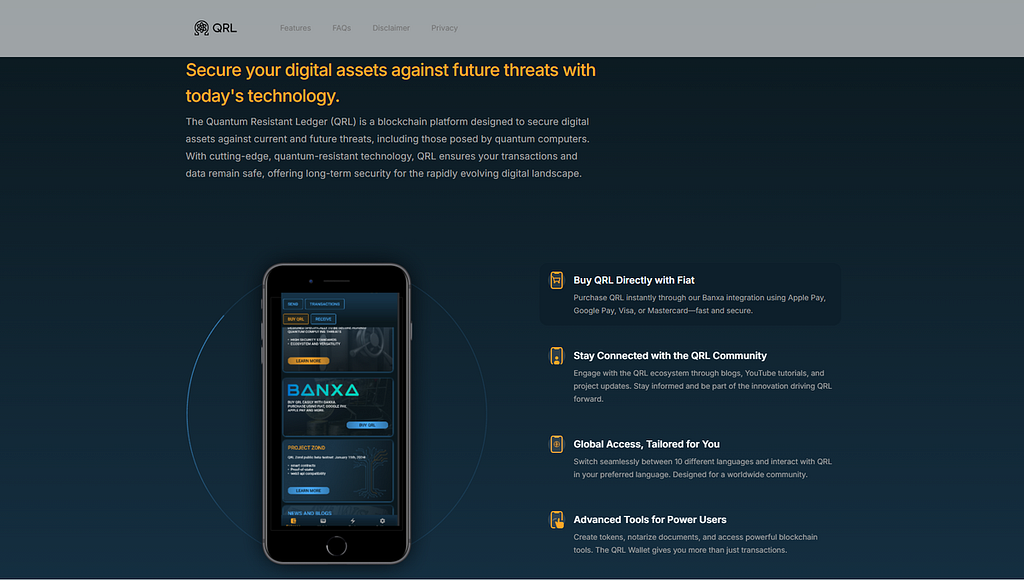
It uses the XMSS algorithm, a NIST-standardized and widely recognized post-quantum cryptography solution.
That said, for now there’s only one token there — the native one. But this wallet isn’t the only option. Active work is also underway on projects like: Open Quantum Safe, Hedera Hashgraph, Quranium, and Anchor Wallet.
How can you protect yourself right now?
If you don’t want to switch to an unfamiliar blockchain, there’s a simpler approach: you can build your own mini post-quantum bunker right on top of Bitcoin.
To do this, create a new wallet with a 24-word seed phrase (for higher entropy). This wallet should only receive funds, never send them.
The reason is simple: for a potential quantum attack, only wallets whose public keys have already been revealed on the blockchain are vulnerable.
Simply put, a hack only becomes possible after at least one transaction is made. Before that, the network only sees the hash of the public key, not the public key itself.
If no outgoing transactions were ever made from a wallet, an attacker has nothing to attack, because recovering a private key is only possible once the public key has been exposed through transactions.
The development of quantum computers isn’t an apocalypse — it’s more like a storm on the horizon. Yes, the risk exists, but even today there are ways to protect yourself.
And by the time truly powerful quantum computers arrive, the crypto crowd will almost certainly have time to prepare properly. After all, encryption algorithms are — open source, which means vulnerabilities can be found and fixed in advance.
If you want to understand crypto on a deeper level and start earning consistently instead of picking up bits and pieces of knowledge, register on the exchange using my link below and then join the Telegram group.
There, I share my DeFi strategies, explain how to replicate them, and provide trading bots and other tools with real returns.
Claim your welcome-gift USDT for registering on BingX and secure great discounts on trading fees!
https://bingx.com/partner/capcrypto
Referral code: CAPCRYPTO
Will quantum computers crack Bitcoin?! It’s time to sell! was originally published in The Capital on Medium, where people are continuing the conversation by highlighting and responding to this story.